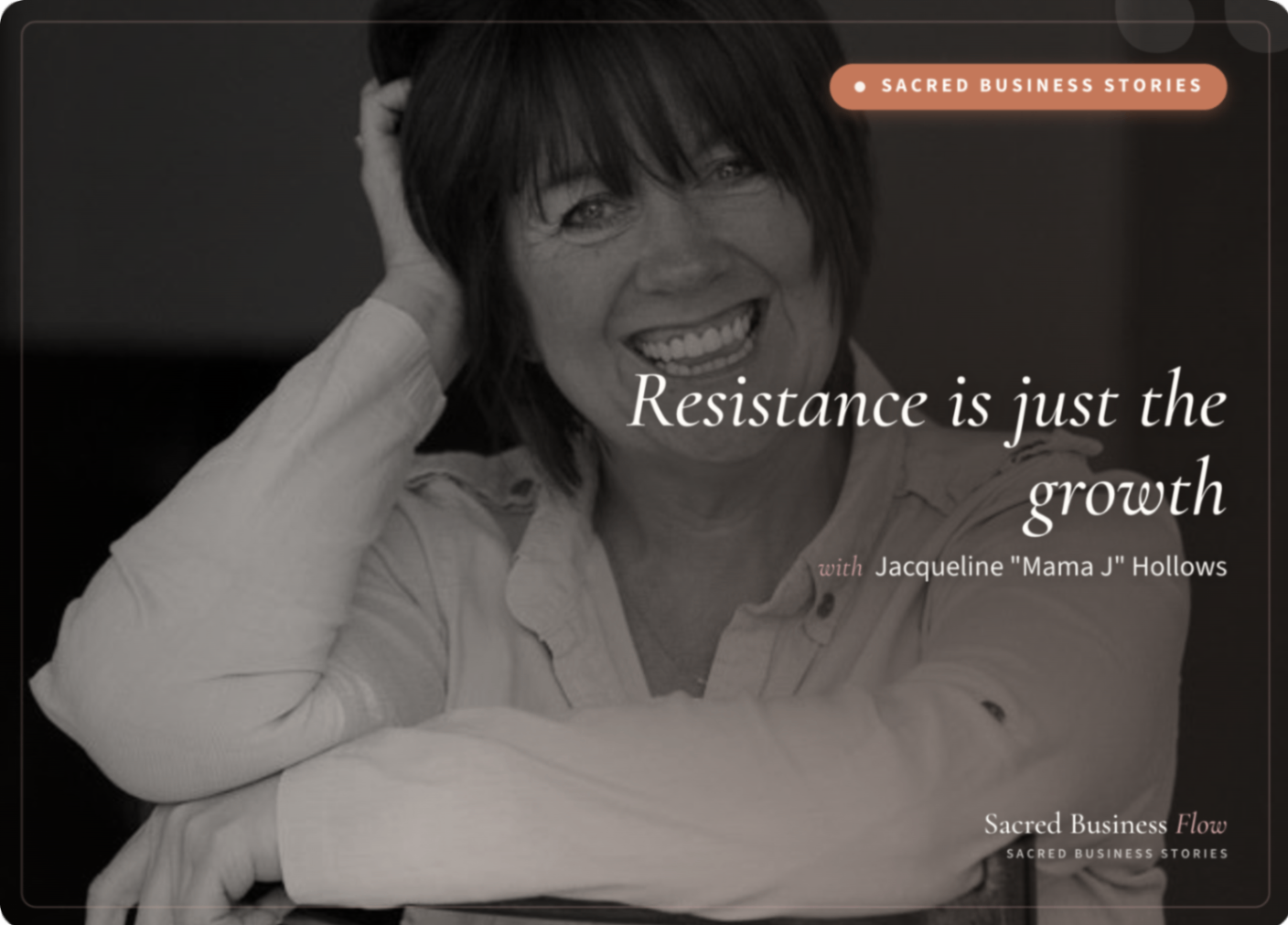
Jacqueline Hollows stood on a prison wing on her first day with a clipboard and a set of keys she'd been trained to carry. The men had been locked up longer than usual that weekend, and when the doors opened they came out half-dressed, jumping the railings, banging plastic cups against the rails. Wild, in her telling. Like the TV.
She had spent her whole career in IT. No prison experience, no background in mental health, a project manager whose safety training had just covered how men make knives from a pen and a toothbrush, and what to do if you're taken hostage.
What she wanted made no sense on paper. She wanted to work with these men. A feeling had told her to, and she had learned to follow it.
The feeling arrived a few years earlier in a park in the UK, on a beautiful September day, while she was volunteering on a film for a recovery organisation. The park was full of people in every stage of addiction and recovery, and Jacqueline, who at the time had very little interest in anything spiritual, was hit by something she could not explain.
"I literally felt drownded in love. I love these people. I have to help them. I don't know how. I don't know why. I don't know how I'll get paid for that. But it just was so compelling."
That same day she met a shy psychologist who worked in addiction recovery, and she poured out ideas she didn't yet understand herself. He told her, I don't understand what you're talking about, but you need to come and talk to my group. So she did, for years.
The short version of what came next: she started a social enterprise sharing an understanding of how the mind works and how change happens from the inside out, took it into prisons up and down the UK and for a day in South Africa, pioneered research, wrote a book called Wing of an Angel, and spoke on stages around the world, Singapore included. The men she worked with gave her the nickname she still goes by. Mama J.
We had her on Sacred Business Stories to trace how an IT project manager ends up there. The part that stays with you is what happened back on the wing.
On that first day, petrified, holding the clipboard with the list of men she was allowed to let in, she was approached by a big man with a shaved head and a tattoo on his neck. He wasn't on her list. She let him in anyway, because she didn't want to say no.
"I just want to see the chicks."
She assumed he meant the female prison officers lined up on the parade ground outside. He walked past her to the window, moved her flip chart, and looked out through bars so close together you could barely see anything but barbed wire. On the window ledge sat a nest with dove eggs. He'd been feeding the doves bread from his own dinner, and he was getting out in a week, hoping the eggs would hatch before he left.
"I don't even remember this man's name. But what I always say to people is he saved me. He saved the projects."
Because in that moment she saw how much invisible judgment she'd carried in with her about the very people she wanted to help, and how much the media had shaped what she expected to find behind those doors.
"I know nothing. I'm here to learn. I'm not here to teach."
Two things from the conversation stood out.
The first was what she said about fear. Jacqueline was once so terrified of public speaking that she lost a job opportunity because she couldn't get the words out. Then one day, parked on her drive, a thought arrived: you're going to be speaking in front of thousands of people. She told it, you've got the wrong person. It kept coming back. So she started small, five-minute talks at networking events, and hated every one of them. Until the day she dropped her notes and told a room a story about learning the piano. A queue of people formed to talk to her afterward.
"Heart-led entrepreneurs often think that resistance means you shouldn't do it. But resistance is just the growth."
She treats resistance as information about where growth lives, and the real signs as something cleaner. Her own example was small on purpose. An email sat unanswered in her inbox for two weeks, and it got answered the morning she noticed that avoiding it was costing her more than doing it.
The second was what she said about metrics, because she's building on Substack now and gets asked about growth like everyone else.
"I love the hearts. But I'm not going to measure my worth by the hearts. If I talk to one person and one person walks away feeling more inspired, better about their life, that's it. Job done."
And she backed it with a story. In 2019 she watched a group in prison descend into chaos, a man doing press-ups on the floor in the middle of it, and concluded no impact was happening in that room. A year later, on one of her weekly lockdown Zooms, the press-up guy turned up and told her that group changed his life. He'd left prison, discovered he loved opera, and was living in his car on the grounds of a university while he persuaded them to let him do a criminology degree.
"You just have to show up and do your thing. You don't know who's being impacted."
What her story reframes is the way niche usually gets taught. Pick a lane, define the avatar. Her version runs the other direction. Your niche finds you when you follow what's actually alive, and the years that look like a detour turn out to be raw material. Twenty-plus years in IT didn't disqualify her from prison work. The project manager is the reason the projects ran.
She would never have planned any of it. That's rather the point.
She works mostly with social entrepreneurs who want to grow their impact and income without burning out, through her new program, the Impact Activator.
Watch the full replay. The dove story alone is worth it.