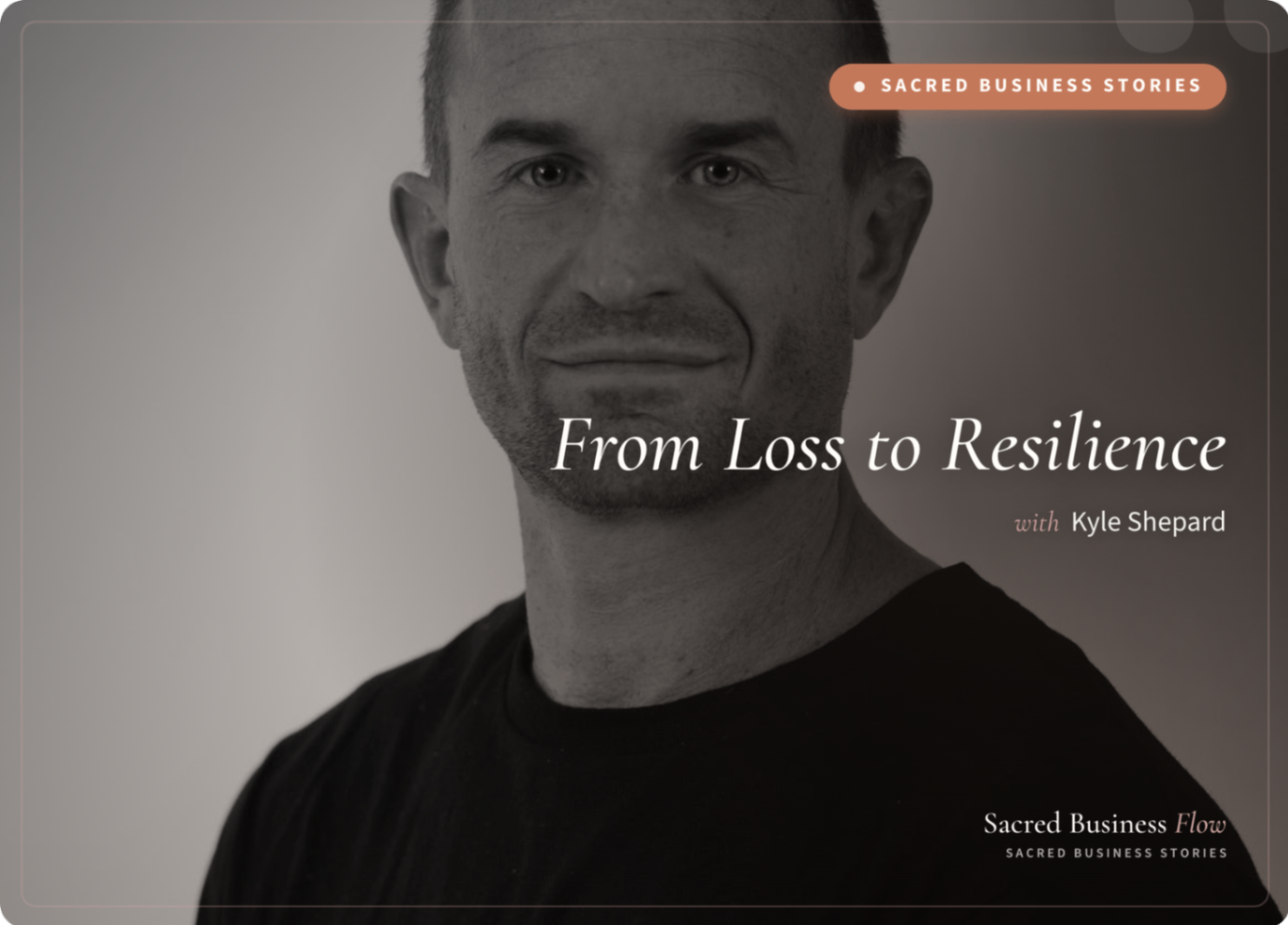
Kyle Shepard and his wife had been in Guam about a month, newlyweds on the other side of the world, when they found out she was pregnant. They hadn't planned it. They were thrilled anyway. Then they lost the child.
She was thousands of miles from her family, one of six siblings who were her best friends, alone in the apartment most of the day. Kyle had just found Brazilian jiu-jitsu and was training twice a day, before and after work, telling himself he was holding things together.
What he wanted was simple. He didn't want to lose his marriage too.
They were an audiologist and a speech pathologist. Expert communicators on paper. And they were not communicating. When they were together, alcohol was usually involved, and so were the assumptions and the reactivity that come when two people stop connecting. His wife started thinking about going back stateside to be near her family. They talked about separating.
No, let's give this a hard try.
That was the decision, after one very difficult night. What they did next was almost embarrassingly plain. They set aside dedicated time in the evenings with no technology, what Kyle calls technology time, and used guided conversation to be present with each other again. Within a month of coming through it, his daughter Evelyn was on the way.
The rest is what his bio leads with. Kyle is 38, a Navy audiologist of twelve years stationed at Patuxent River in Maryland, now working in human performance research rather than seeing patients. He's a Brazilian jiu-jitsu brown belt, a functional fitness coach, a military resilience instructor, and he writes a Substack called Resilient Mental State. Father of three, a fourth daughter due in July.
So we had him on Sacred Business Stories. The part you don't get from the bio is that the framework he now teaches came out of that month in Guam.
Kyle builds his whole approach on two ideas borrowed from exercise physiology. The SAID principle, specific adaptations to imposed demands: if you want to get better at a thing, do that exact thing. And progressive overload: start at a manageable level, recover, then push the envelope a little further. He applies both to stress itself. He calls it intentional stress. You put yourself under a manageable amount of pressure on purpose, learn to stay calm inside it, then turn the dial up. The loss taught him and his wife to build their strategies in calm, not in crisis, which is why every harder loss since has had a plan already waiting for it.
Two things stood out from the conversation.
The first was how he defines courage.
Courage is not the absence of fear. It's the understanding of the fear response and acting anyway, because you know it's important.
He'd know. As a kid he almost fainted giving a presentation he wasn't ready for. He was more scared of public speaking than of dying for years. Now he speaks for a living, in the military and outside it. He didn't read his way out of the fear. He did the exact thing, at a level he could handle, and let it get easier.
The second was a line about how the body actually works.
There's no physiologic difference between anxiety and excitement. It's just how do we label it.
Same racing heart, same tight chest, same shallow breath. Distress and eustress run on identical wiring. The label is the part you get to choose. The label won't make the fear vanish. What it gives you is a small amount of control in a life that hands you very little, and Kyle is honest that the control lives in two places only: how you interpret a thought, and what you do next.
His read on when to act and when to wait was the cleanest version I've heard.
Inaction is a decided action when it makes sense.
What his story reframes is the idea that resilience is something you either have or you don't. Kyle's case says it's a skill, trained like any other, and the worst time to start training it is in the middle of the emergency. The traffic, the power outage, the loss. Those are the tests. The practice happens on an ordinary Tuesday when nothing is wrong, with something as basic as slowing your exhale until your nervous system catches up.
There's a second reframe underneath the first. He won't say he's grateful he lost that child. He will say the loss had meaning, that without it he and his wife wouldn't have built the strategies that carried them through everything after. Both things, held at once, without tidying either one away.
You can find Kyle writing at Resilient Mental State, resilientmentalstate.com. He posts a reflective question most mornings and answers his own.
He speaks to anyone carrying stress, which is everyone, in or out of uniform. As he puts it, when he asks a room who's affected by stress, the answer is always the same. Everybody, every day.
Check out the full replay. For a guy who says he doesn't prepare, he doesn't waste the hour.